
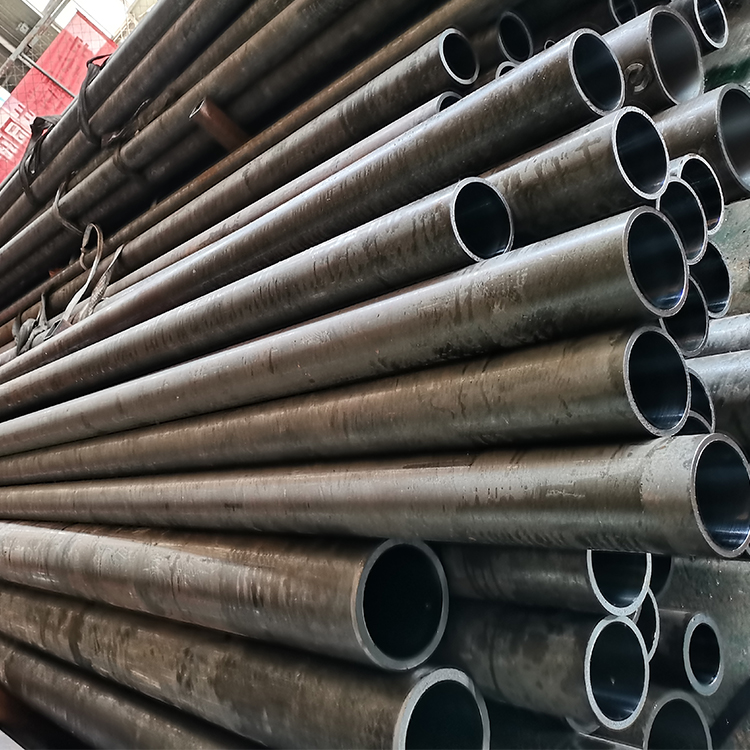
How does the honing process improve the surface finish of pipes
The honing process improves the surface finish of pipes in several key ways:
- Removes surface irregularities: Honing removes any surface defects, tool marks, or imperfections left from previous machining processes, resulting in a very smooth, mirror-like finish.
- Achieves a precise cross-hatch pattern: The combination of rotating and reciprocating honing stones creates a precise cross-hatch pattern on the pipe surface. This cross-hatch finish improves lubrication and wear properties.
- Tightens dimensional tolerances: Honing is able to hold very tight tolerances on the pipe's inner diameter, often in the range of H8 or H9, ensuring a consistent and precise finish.
- Improves cylindricity: The honing process helps correct any out-of-roundness or taper in the pipe, producing a highly cylindrical inner surface.
- Relieves internal stresses: Honing relieves internal stresses in the pipe material, improving dimensional stability and performance.
- Achieves very low surface roughness: Honed pipes can achieve surface roughness values as low as Ra 0.3 microns, which is an exceptionally smooth finish.
In summary, the honing process is able to produce pipes with an extremely smooth, precise, and uniform interior surface finish that is ideal for demanding applications requiring tight tolerances and superior performance.