
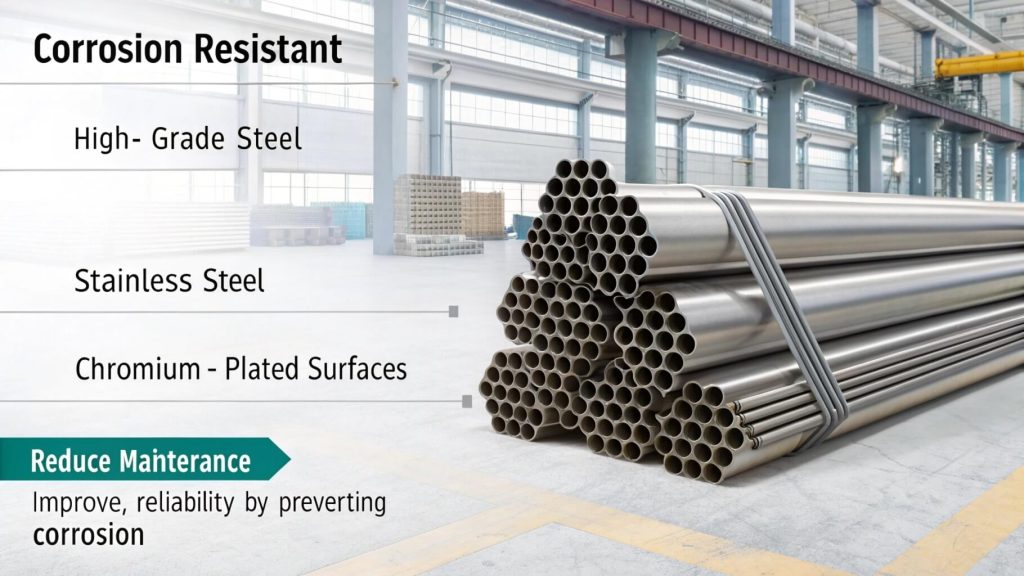
Corrosion can destroy pipes, but honing pipes provide better solutions.
Honing pipes improve durability with enhanced corrosion resistance, ensuring longer lifespans in various environments.
Explore how honing pipes withstand corrosion and why they are a reliable choice.

Which Pipe Is Corrosion Resistant?
Corrosion issues waste resources, but resistant pipes solve the problem effectively.
Corrosion-resistant pipes[^1] are designed to endure harsh environments, reducing maintenance and improving reliability.
Materials and Coatings That Prevent Corrosion
Honing pipes[^2] use high-grade steel and advanced coatings to reduce corrosion. Common materials include stainless steel and chromium-plated surfaces.
| Material Type | Corrosion Resistance Level | Common Applications |
|---|---|---|
| Stainless Steel | High | Marine, chemical industries |
| Chromium-Plated | Moderate to High | Hydraulic systems, construction |
| Carbon Steel with Coating | Moderate | General-purpose piping |
Stainless steel[^3] is preferred due to its balance of cost and performance. Coatings enhance longevity further.

What Advantage Does Corrosion-Resistant Steel Tubing Have?
Fighting corrosion reduces costs and maintenance time.
Steel tubing with corrosion resistance[^4] is cost-effective, durable, and suitable for demanding conditions.
Benefits of Corrosion-Resistant Tubing
Corrosion-resistant steel tubing offers several advantages:
- Extended Lifespan: Fewer replacements save costs.
- Reduced Maintenance: Lower need for frequent repairs.
- Higher Performance: Consistent function in challenging conditions.
- Sustainability: Reduced waste and environmental impact.
- Safety: Avoids leaks and failures in critical systems.
These benefits make corrosion-resistant tubing ideal for industries like construction and engineering.

What Materials Are Best for Honing Pipes in Corrosive Environments?
Corrosive environments need robust materials.
High-quality alloys and coatings[^5] protect honing pipes from harsh conditions effectively.
Top Material Choices for Corrosive Settings
Selecting the right material ensures durability:
| Material | Key Properties | Example Usage |
|---|---|---|
| Stainless Steel (316L) | Excellent resistance to chemicals | Food and chemical processing |
| Duplex Stainless Steel | High strength, corrosion-proof | Oil and gas pipelines |
| Nickel Alloys | Extreme resistance to acids | Aerospace, chemical plants |
Combining strong materials with honing[^6] increases resistance and extends usability.

How Does the Honing Process Improve Corrosion Resistance?
Poor finishes lead to rust. Honing solves this.
Honing[^7] enhances surfaces, making them smoother and less prone to corrosion.
Process Insights: Honing and Corrosion Resistance
Honing reduces surface irregularities where corrosion begins.
Key Benefits of Honing for Corrosion Resistance:
- Reduced Surface Roughness: Improves sealing and coatin
Conclusion
Corrosion-resistant honing pipes are a dependable choice across industries. Here's why:
- Use of durable materials like stainless steel and chromium.
- Surface treatments like honing improve resistance and lifespan.
- Reduced maintenance and better performance in harsh environments.
- Cost-effective in the long term despite higher upfront investment.
- Environmentally friendly with reduced waste and resource use.
Investing in corrosion-resistant honing pipes ensures long-term reliability and efficiency.